


Some Prefer Metal Chess Sets over Wood - Why? - ChessBaron Chess Sets Canada
Some Prefer Metal Chess Sets over Wood – Why?
Wood may be the traditional choice for chess pieces, but the weight, feel and distinctive appearance of metal have earned it a devoted following of its own.
Wood and chess have been companions for centuries, so choosing wooden pieces can seem almost automatic. Boxwood, ebony, rosewood and acacia suit the familiar Staunton form beautifully. Yet put a substantial metal chess piece into someone’s hand and the argument suddenly becomes less one-sided.
Metal chess pieces offer something wood cannot quite reproduce: sheer physical presence. Their weight changes the experience of moving them, their finishes can create dramatic contrasts, and designers can use the material to produce shapes that range from traditional Staunton to decidedly modern sculpture.
It Starts With the Weight
Weight is probably the most immediate difference. Well-weighted wooden pieces can certainly feel substantial, but metal achieves that solidity naturally. There is something satisfying about lifting a heavy rook, moving it across the board and putting it firmly onto its new square.
That doesn’t improve your chess, unfortunately. A dubious sacrifice remains dubious even when executed with an impressively heavy bishop. But it does change the tactile pleasure of playing, particularly for someone who enjoys a chess set as a physical object rather than merely a collection of 32 markers.
Metal Allows a Different Kind of Design
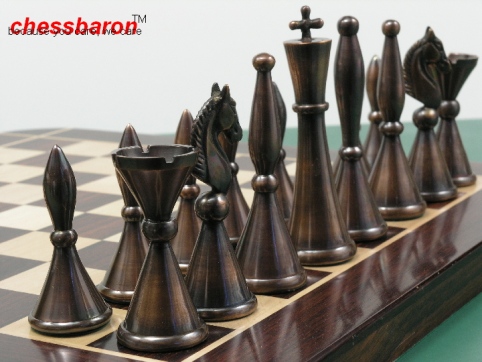
Metal also gives designers freedom to move beyond the appearance of carved timber. The Sebastian Heavy Steel and Copper Chess Set illustrates the point. ChessBaron’s design combines copper and steel in a set intended to be both very heavy and highly detailed. Rather than trying to disguise the material, it makes metal part of the character of the pieces.
For a modern home, that can be a significant attraction. Polished and contrasting metal finishes can sit naturally alongside contemporary furniture, glass and architectural interiors where a conventional wooden set might create an entirely different mood.
Chess Pieces Can Become Small Sculptures
The difference becomes more obvious when the designer abandons conventional chess shapes altogether. The Yves Tanguy Contemporary Heavy Metal Chess Set is based on the chess design associated with surrealist artist Yves Tanguy. The original concept used remarkably simple forms; this interpretation adds greater width and weight, with contrasting pewter and copper finishes.
It is a good example of why some people buy a chess set partly as an object for the room. When nobody is playing, the pieces remain on display. An unusual metal set can therefore earn its place on a table in much the same way as a piece of sculpture—except this sculpture occasionally produces a nasty fork on f7.
Traditionalists Don’t Have to Choose Wood
Preferring metal does not mean rejecting traditional chess. The King John Very Heavy Brass Staunton Chess Set retains a recognizable Staunton design while using solid brass. Its king stands just over 4 inches high with a 1.6-inch base, the pieces are triple weighted, and additional queens are included for pawn promotion.
The two armies are deliberately differentiated by their finishes, something particularly important with metal pieces. The detailed knight also demonstrates that metal chess does not have to mean simplified forms. For someone who wants the familiar language of Staunton with the heft of brass, this is the middle ground.
Wood Still Has Advantages
Metal isn’t automatically superior. Wood has warmth, natural grain and subtle variations that make every set slightly individual. It also carries the strongest connection with traditional tournament chess. For many players, an ebony and boxwood Staunton set on a wooden board is exactly what chess ought to look like.
The better question, then, isn’t which material wins. It is what you want from the set. If tradition, natural texture and warmth matter most, wood remains difficult to beat. If you enjoy weight, unusual finishes, modern design and a set with considerable visual presence, metal deserves serious consideration.
Perhaps You Need to Pick One Up
Photographs can show the difference between wood and metal, but they cannot communicate the most persuasive part: the feel. For some players, the moment a heavy metal king lands in the palm is when the attraction makes sense. It feels permanent, substantial and just a little extravagant.
Wood owns most of chess history. Metal doesn’t need to compete with that. It simply offers another way to enjoy the same game—and for some chess players and collectors, a surprisingly compelling one.